ServicesWindow Tint
Window Tint in Lake of the Pines
Our shop fits carbon and ceramic film to your car's glass so the cabin runs cooler, UV stays out and the view stays clear for years. We help you weigh what each film costs today against how long it lasts, so your choice still makes sense down the road.
Tint chosen for how it holds up, not just how it looks
Window tint is a thin film applied to the inside of your car's glass. Good film cuts heat, blocks almost all UV, reduces glare and adds privacy. Cheap film does some of that for a while, then fades purple, bubbles or peels, and you pay again to have it scraped off.
We look at tint as a long-term part of the car. A film that costs more up front often earns it back by staying clear and doing its job for years, with no upkeep beyond gentle cleaning. When a lighter or simpler film fits how you drive, we say so.
We've been in business for 6 years, and the hands on your glass belong to a lead installer with 15 years of experience. You can see that time in the small things: edges that hug the seals, clean work along the dot-matrix border and no specks of dust caught under the film.
What your window tint job includes
A film recommendation that fits your use
We compare carbon and ceramic film side by side and explain the difference in heat rejection, clarity and lifespan. You choose with the numbers in front of you.
California-legal shade guidance
California requires front side windows to let in at least 70 percent of visible light, so we steer you toward clear or very light heat-rejecting film there. Rear side and back glass can go darker, and we can add a strip across the top of the windshield.
Glass prep and precise cutting
We clean and clay the glass, then cut each piece to your car's exact shape. Edges sit close to the seals so they don't lift or collect grime.
Old film removal when needed
If faded or bubbled tint is already on the glass, we steam and strip it and clean off the adhesive before new film goes on. We take care around rear defroster lines.
A final check in good light
Before we hand back the keys, we inspect every window under bright shop lights for dust, lifted corners or gaps at the edges. Anything we find gets fixed then, not on a return trip.
Signs it's time for new or first-time tint
- Your cabin bakes in the sun
- If the steering wheel and seats are too hot to touch after a summer afternoon parked outside, film with strong heat rejection makes a real difference.
- Old tint has turned purple
- Purple tint is dyed film breaking down. It has lost most of its heat and UV performance and will only get worse.
- Bubbles, peeling or hazy patches
- Bubbles mean the adhesive is failing. Beyond looking rough, they distort your view, especially through the rear window at night.
- Dash and upholstery are fading
- Sun damage to leather, vinyl and dash plastics adds up quietly. Quality tint blocks nearly all UV and slows that wear.
- Glare wears you out on long drives
- Low sun on the commute toward Auburn or Lincoln can be tiring. The right shade cuts glare without making the glass too dark to see well.
How your tint appointment runs
- 1
Consultation by phone
We ask about your car, how you use it and what bothers you most, heat, glare or privacy. Then we give you a quote based on the film you're leaning toward.
- 2
Drop-off and film check
You bring the car to our shop. We look over the glass, confirm the shade and film with you and point out anything like old tint or chipped edges before we start.
- 3
Prep, cut and install
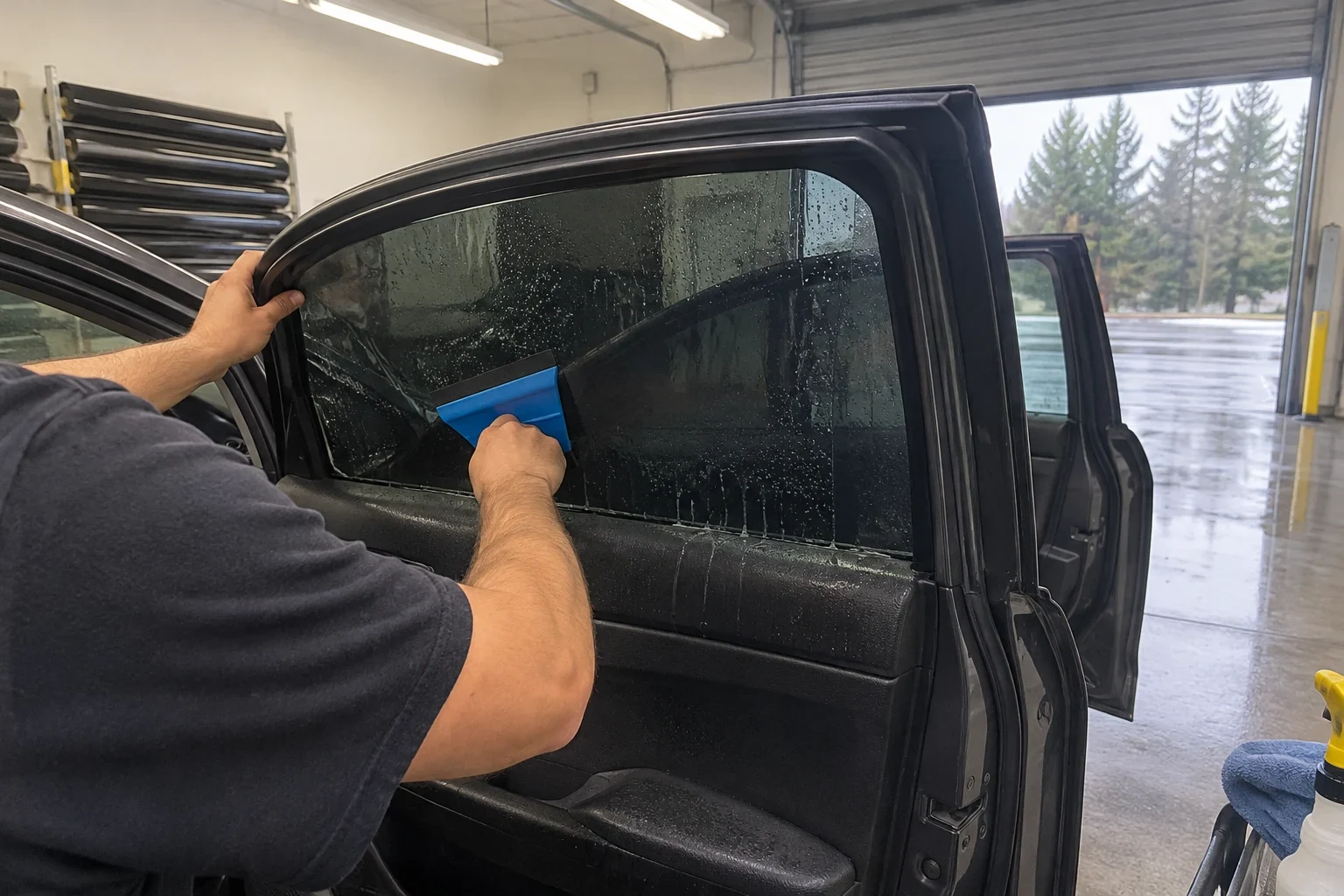
We clean the glass, cut each panel to fit and apply the film with a slip solution, squeegeeing out water and air. Plan on leaving the car with us for part of the day.
- 4
Walkthrough and cure
Before you drive off, we look over the finished windows together and go through aftercare. Leave the side glass up for the first several days so the adhesive can set. A little haze or a few small water pockets early on is normal, and they fade as the last moisture evaporates.
What affects the price of window tint
Tint pricing comes down to the film and the amount of work your glass needs. We quote by phone once we know your car and what you want, and we explain how each choice affects both today's cost and how long the film will last.
- Film type
- Ceramic film costs more than carbon but rejects more heat without darkening the glass. For a car that sits in the sun all summer, it usually pays off over the years you own it.
- Number of windows
- Rear sides and back glass only is a smaller job than every window plus a windshield strip or sunroof.
- Vehicle shape
- Steeply curved rear windows and small quarter glass take more time to shrink and fit. Some coupes and SUVs are simply more involved.
- Removing old tint
- Stripping failed film and cleaning off old adhesive adds labor, particularly on rear glass with defroster lines.
Window tint questions we hear most
- How dark can I go and still be legal in California?
- Front side windows need to let in at least 70 percent of visible light, which means clear or very light film. Rear side windows and the back glass can be any darkness as long as you have both side mirrors. We'll help you get the heat benefit up front with a clear ceramic film.
- Is ceramic tint really worth the extra cost?
- For many drivers, yes. Ceramic film rejects more heat than carbon at the same shade and doesn't fade. If you keep cars a long time or park outside, the comfort and lifespan usually justify the difference. If the car is a short-term vehicle, carbon may be the better value, and we'll tell you so.
- Will tint interfere with my phone, GPS or radio?
- The carbon and ceramic films we install contain no metal, so they don't block cell, GPS or radio signals. That was a common problem with older metallic films.
- How long before I can roll my windows down?
- Give it a few days. The film needs time for the remaining moisture to dry so the adhesive bonds fully. Warm weather speeds this up, and cooler months take a little longer.
- What does the warranty cover?
- We back our window tint with a lifetime warranty. If the film bubbles, peels or changes color, bring the car back to our shop and we'll make it right. We go over the details with you when you pick up the car.
- Should I add protection to the windshield too?
- Tint on the windshield is limited to a strip across the top in California. If chips and pitting from gravel are your concern, ask about our Windshield Protection Film, which is a separate clear film made for impact.
Pick a tint you'll still be happy with years from now
Tell us about your car and how you drive, and we'll help you weigh the film options and what they cost over time. Drivers bring their cars to us from Grass Valley, Meadow Vista and all around Lake of the Pines.