ServicesPaint Protection Film
Paint Protection Film in Lake of the Pines
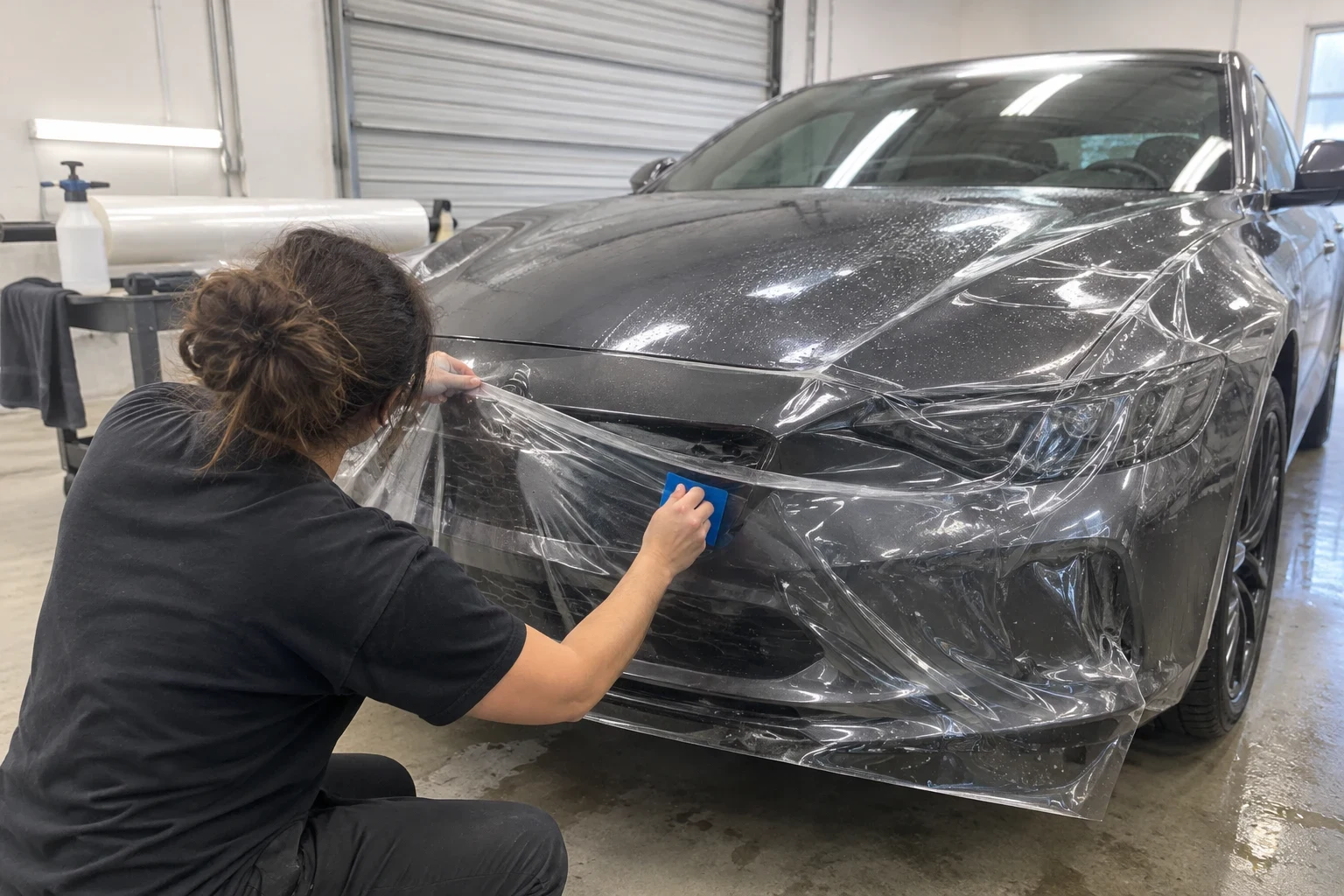
Paint protection film is a clear urethane layer that takes the rock chips, road grime and bug etching so your factory paint doesn't. We install it at our shop, help you choose coverage that fits how long you'll keep the car, and explain exactly what it needs afterward.
What Clear Bra Does and When It Pays Off
Paint protection film, often called clear bra, is a thick, nearly invisible film applied over painted panels. It is flexible enough to wrap edges and tough enough to absorb small impacts that would otherwise chip through clear coat and color. Most modern films also have a self-healing topcoat, so light swirls and scuffs fade with warmth from the sun or a warm-water rinse.
The honest question is whether it's worth the up-front cost for your car. We look at it like this: a single respray of a hood and bumper, plus the color-matching headaches that come with it, can cost a large share of what a front-end film install does. If you plan to keep the vehicle for years, drive the highway often, or want to protect resale value, film usually earns its keep. If the car is near the end of its run, we'll tell you so.
We've been in business for 6 years, and we'd rather sell you the coverage that makes sense than the biggest package on the board.
What Your Paint Protection Film Install Includes
- Coverage built around your driving
- Options range from high-impact zones like the bumper, hood leading edge and mirrors, to a full front end, to the whole vehicle. We'll show you where chips actually land on your model so you're not paying to cover panels that rarely take hits.
- Wash and decontamination
- Before any film goes down, the paint is washed, clay-treated and wiped with a panel prep solution. Film locks in whatever is underneath, so this step matters more than any other.
- Paint correction where needed
- If there are swirls or light scratches, we can polish them out first. We'll point these out at the walkaround and explain whether correction is worth adding.
- Wrapped edges and careful seams
- Wherever the panel allows, we wrap film around edges so it's harder to spot and less likely to lift. Where a seam is needed, we place it along a body line.
- Final inspection and care walkthrough
- At pickup we go over the car with you in good light and explain how to wash the film and what to avoid during the first days of curing.
Signs Your Car Could Use Paint Protection Film
You just picked up a new car
The paint will never be in better shape than it is right now. Film applied early protects that finish before the first chip ever happens.
Your hood already has a few chips
Small chips spread and can let moisture reach bare metal. We can touch up minor ones and protect the panel so it doesn't get worse.
You put a lot of highway miles on
Steady commuting behind trucks and on foothill roads like those around Grass Valley and Auburn means constant sand and gravel at speed. The front end takes most of it.
Sandblasting behind the wheels
Rocker panels and the area behind the front wheels get pitted by debris kicked up by your own tires. These are cheap areas to cover and expensive to repaint.
You own a lease or a car you'll resell
Clean, original paint helps at lease turn-in and at sale. Film keeps it that way without changing the look.
What Affects the Cost of Paint Protection Film
Every quote is based on your actual car and the coverage you pick, so we give pricing after we know both. The biggest swing is how much of the vehicle you want covered. We'll lay out the options side by side so you can weigh up-front cost against how long you'll keep the car.
Coverage area
A partial front package uses far less film and labor than a full front end or full body. Many drivers start with the high-impact zones and add more later.
Vehicle size and shape
Deep bumper vents, sharp body lines and large panels take more time to wrap cleanly. A compact sedan and a full-size truck are very different jobs.
Paint condition
Paint with swirls or scratches may need correction before film goes on. Older touch-ups or respray work can also change how we approach a panel.
Film finish
Gloss film keeps the factory shine, while matte or satin film changes the look of gloss paint or protects factory matte paint. The finish you choose affects material cost.
Pairing with ceramic coating
Some drivers add ceramic coating over the film and the uncovered panels for easier washing. It's optional, and we'll explain whether it's worth it for you.
How Your Install Day Works
- 1
Drop-off and walkaround
You bring the car to our shop, and we walk around it together. We note existing chips, scratches or prior paintwork so we both know the starting point.
- 2
Prep and correction
The car is washed, decontaminated and, if you've chosen it, polished. Every panel getting film is wiped down so the adhesive bonds directly to clean paint.
- 3
Film installation
Our lead installer, who has 15 years of experience, handles the work. Film is positioned with a slip solution, squeegeed into place and stretched carefully around curves without overworking the material.
- 4
Curing and inspection
The car stays inside while the adhesive sets. We check edges, corners and seams and fix anything that isn't right before you see it.
- 5
Pickup and aftercare
We go over the finished work with you and explain washing, waiting periods and what small haze or moisture spots are normal while the film cures.
Paint Protection Film Questions
Will people be able to see the film?
On most cars the film is very hard to pick out once it's on. Wrapped edges hide the line on many panels, and where an edge has to show, we run it along a body line. In bright, direct light up close you might catch it, but from a normal distance it just looks like clean paint.
How soon can I wash my car after the install?
Give the adhesive a few days to set before the first wash. Once that window passes, a regular hand wash is fine. Keep a pressure washer from blasting straight at film edges, and leave abrasive polishes off the film.
Does paint protection film turn yellow over time?
That reputation comes from older films. Today's urethane films are built to resist yellowing and stay clear, and regular washing helps them do it. Cleaning off bird droppings and tree sap promptly also adds to the film's life.
Can the film be removed later?
Yes. Good film is made to peel away cleanly with some heat and patience, and the paint underneath is left in the shape it was in when it was covered. On factory paint, removal is usually simple. Panels that have been repainted call for a gentler hand.
Should I get paint protection film or ceramic coating?
Each one handles a different job. Film is a physical layer that soaks up chips and scratches, while ceramic coating boosts gloss and makes washing easier but can't stop a rock. A common setup is film on the front end and ceramic coating everywhere else.
How long will my car be at the shop?
That comes down to how much of the car you're covering and whether paint correction is on the list. A partial front package goes faster than a full body job. During your consultation we'll lay out a realistic timeline so you can plan your days without the car.
Let's Find the Right Coverage for Your Car
Tell us what you drive and how long you plan to keep it. We'll walk through your options and give you a straight quote before any film goes on.